
Ichiban Stays provides holiday let management for owners across the UK, from city apartments and seaside flats to countryside cottages. We run your holiday rental as a professional short-stay business: listings, dynamic pricing, guest communication, cleaning, linen, maintenance and reporting, while you keep the weeks you want for yourself. This page explains how our holiday rental management works, the rules UK holiday let owners need to know, and how to get a free income projection.
What Is Holiday Let Management?
A holiday let is a furnished property rented to guests for short stays, usually a few nights to a couple of weeks. Holiday let management, also called holiday rental management or vacation rental management, means handing the day-to-day running of that property to a specialist. A good manager markets the property, prices it to demand, looks after guests, cleans and restocks between stays, deals with maintenance and keeps you informed, so the property earns well without you answering messages at midnight or arranging a cleaner from the other end of the country.
Our Holiday Rental Management Service
- Listing and photography: professional photos and listing copy that show the property, the area and what makes it special, published on Airbnb, Booking.com and other channels.
- Dynamic pricing: PriceLabs pricing reviewed by our team, reflecting school holidays, bank holidays, local events and the shoulder seasons.
- Calendar and channel management: availability synchronised across platforms to prevent double bookings.
- Guest communication: enquiries, screening, arrival instructions, local tips and support during the stay.
- Cleaning and linen: thorough turnovers with fresh linen, towels and restocked essentials before every arrival.
- Maintenance: repairs arranged through local trades, with larger jobs agreed with you first.
- Reviews and standards: we monitor reviews and keep the property to the standard that earns repeat bookings.
- Owner reporting: clear statements of bookings, occupancy, income and costs.
Holiday Let or Short Let: What Is the Difference?
The terms overlap. “Holiday let” usually describes a property in a tourist area, such as the coast, the countryside or a historic city, booked mainly for leisure stays. “Short let” is broader and also covers city apartments booked by business travellers, contractors and people relocating. We manage both, and many properties benefit from a mix of guest types. See our short let management and Airbnb management services for city properties.
Holiday Let Rules UK Owners Need to Know
Holiday let rules have changed a lot in recent years, and they differ between England, Scotland and Wales. Here are the main points to be aware of. They are a general guide, not legal or tax advice, so check your own position with an accountant or adviser.
- Tax: the furnished holiday lettings (FHL) tax regime was abolished from April 2025. Holiday let income is now taxed in the same way as other rental income, so some former reliefs no longer apply.
- Business rates or council tax in England: a holiday let is generally assessed for business rates if it is available to let for at least 140 nights a year and actually let for at least 70 nights. Otherwise council tax usually applies.
- Wales: the thresholds are higher, at 252 nights available and 182 nights let, and some councils charge council tax premiums on second homes. Wales is also introducing a visitor levy and a register of visitor accommodation.
- Scotland: short-term lets need a licence from the local council, and some areas, including Edinburgh, are short-term let control areas where planning permission may also be needed.
- England registration: a national registration scheme for short-term lets in England is expected to start in 2027, with a registration number required on listings.
- London: whole homes in Greater London can be let for short stays for up to 90 nights a year without planning permission.
- Safety: fire safety, gas safety and electrical checks apply to holiday lets, just as they do to other let properties.
We build these rules into how we plan your calendar and track nights let. For London specifically, read our guide to short-term rental regulations in London.
Preparing a Holiday Home for Guests
Guests compare holiday lets on photos, reviews and the details that make a stay easy. Before launch we walk through the property with you and recommend what will make the biggest difference, which is often simpler and cheaper than owners expect. Typical recommendations include good-quality mattresses and bedding, blackout curtains, enough towels and linen for quick turnovers, a well-equipped kitchen, fast and reliable Wi-Fi, a clear house manual and a self check-in option such as a smart lock or secure key box. For family destinations, a travel cot and high chair can widen your market; for walking and coastal areas, somewhere to dry boots and store bikes helps. We also set up an inventory and photo record of the property at the start, so condition can be checked properly after every stay. Any furnishing or presentation work is agreed with you before it goes ahead, and we never spend your money without approval.
Keeping Your Own Holiday Weeks
Many holiday let owners want to use the property themselves. With full management, you can block dates for your own stays. Tell us early, ideally before the main booking season opens, so we can plan pricing and availability around them. Bear in mind that in England and Wales, nights you use yourself do not count towards the business rates thresholds, so we will flag if your own use risks falling below them.
Making the Most of Seasonal Demand
Holiday rental income is seasonal. Peak summer weeks and school holidays often book far in advance, while winter midweek nights can be quiet. Good holiday let management fills the shoulder seasons as well as the peaks. We do that with:
- Pricing that rises with demand and drops early enough to fill gaps
- Minimum-stay rules that change through the year, such as week-long stays in August and short breaks in winter
- Targeting different guests out of season, such as walkers, remote workers, contractors and families visiting relatives
- Mid-term stays of one to three months where they make sense
Is Your Holiday Home Suitable?
Properties tend to perform best as managed holiday lets when they:
- Are close to the coast, a national park, a historic centre, a university or a major event venue
- Have parking, outdoor space or a view, which guests often search for
- Are furnished to a good standard, with comfortable beds, a well-equipped kitchen and fast Wi-Fi
- Have no lease, mortgage or planning restrictions on short-term letting
We will tell you honestly if a property is unlikely to perform, and what would make a difference.
Holiday Let Management Fees
Our fee depends on the property, its location and the service you choose, and we agree it with you after the consultation and income projection. There are no upfront fees to get started. When comparing holiday let management companies, compare the net income each one projects after all costs, including cleaning, linen and platform commissions, not just the headline percentage. Our guide to property management fees explains what to look for.
Prefer a Fixed Income?
If you want predictable income rather than variable booking income, ask about guaranteed rent. We agree a fixed monthly figure and take on the booking risk. It suits some properties better than others, and your projection will show both options side by side.
How It Works
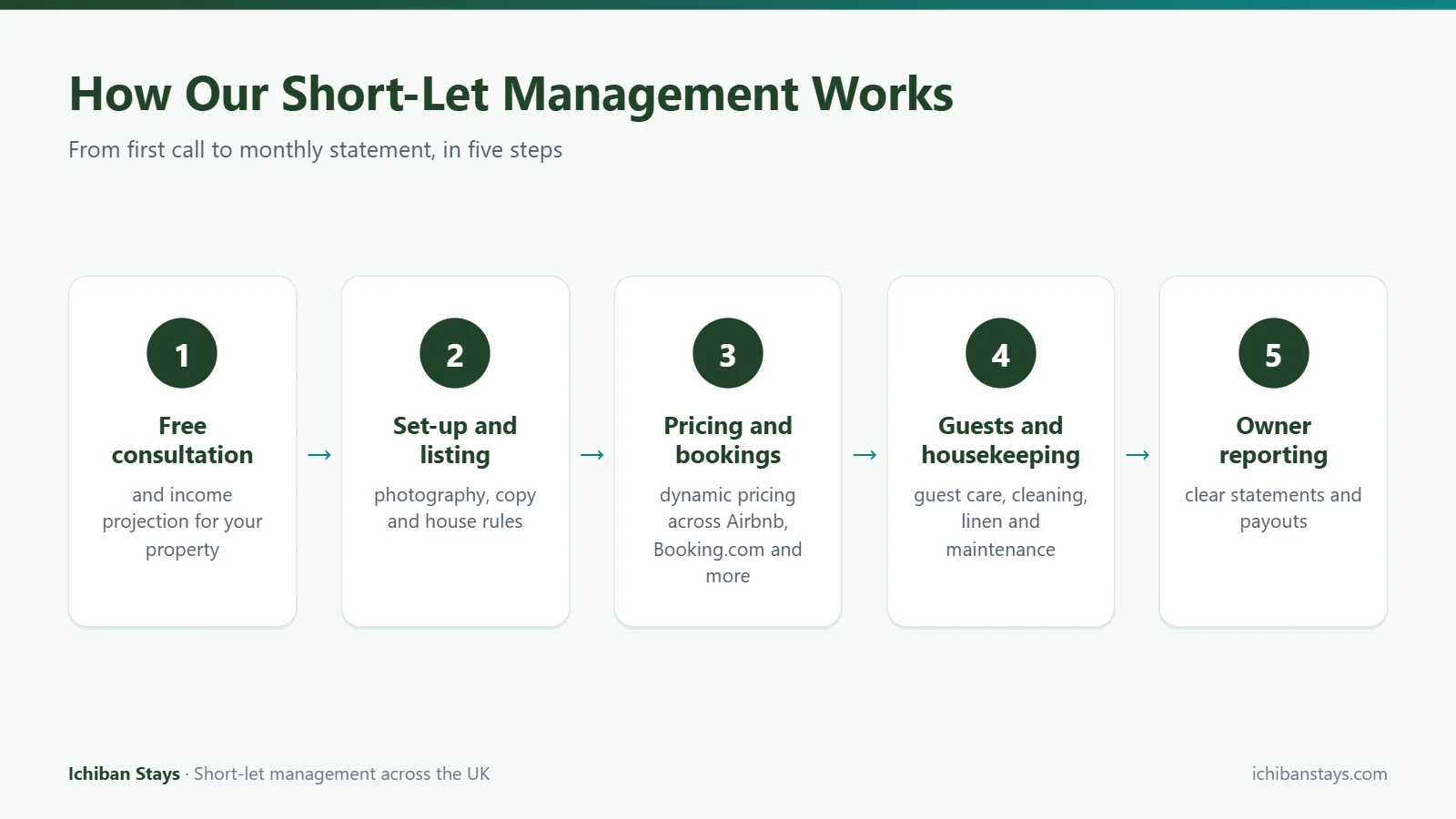
- Free consultation: tell us about the property, its location and how you would like to use it.
- Income projection: we look at comparable holiday lets and seasonal demand and give you realistic figures.
- Set-up: photography, listings, pricing, key handover and housekeeping.
- Live management: guests, cleaning, maintenance and pricing run day to day by your dedicated manager.
- Reporting: clear statements and payouts, with your manager available when you need them.
Where We Manage Holiday Lets
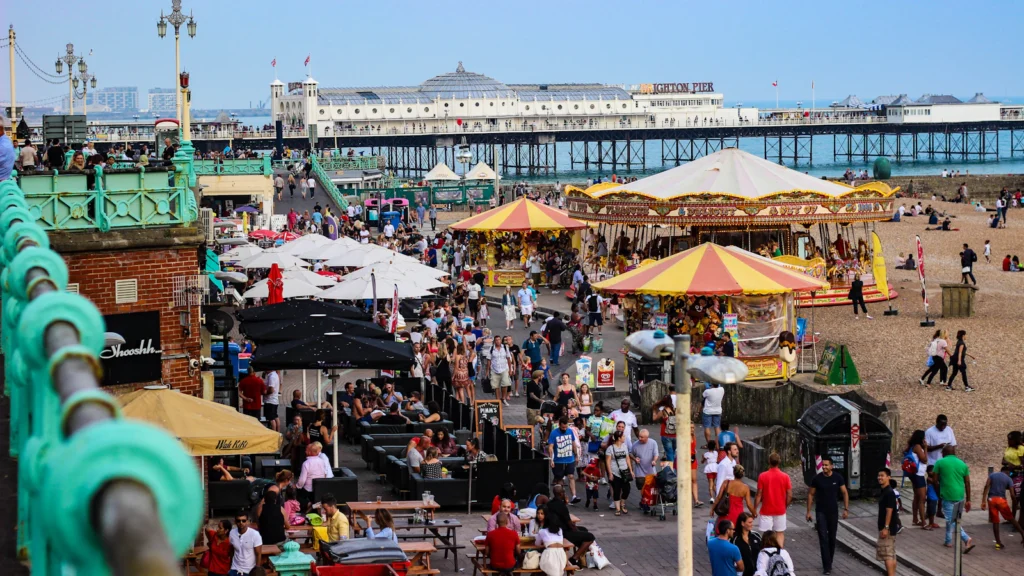
We are based in Mayfair, London, and manage properties across the UK, including popular holiday destinations such as Brighton, Bath, York, Edinburgh, Oxford and Cambridge. See all the areas we cover.
Frequently Asked Questions
What does a holiday let management company do?
It runs the property on your behalf: listings, pricing, bookings, guest communication, cleaning, linen, maintenance and reporting.
Is holiday rental management the same as vacation rental management?
Yes. “Vacation rental” is the American term for a holiday let. The service is the same.
Do I still get tax relief on my holiday let?
The furnished holiday lettings regime ended in April 2025, so holiday let income is now taxed like other rental income. Speak to an accountant about your own situation.
Can you manage a holiday let in Scotland or Wales?
Yes. We plan around Scotland’s licensing scheme and the Welsh business rates thresholds and visitor rules as part of onboarding.
Can I use the property myself?
Yes. Block your dates with us in advance and we will manage bookings around them.
Get a Free Holiday Let Income Projection
Tell us about your holiday home and we will prepare a free, no-obligation projection. Request your free property assessment or book a consultation.
Related Services and Guides
- Property management services for landlords
- Serviced accommodation management
- Airbnb vs a traditional tenancy
- How short-term property management works
Contact Ichiban Stays
Ichiban Stays
25 Hill Street, Mayfair, London W1J 5LW, United Kingdom
Phone: +44 7497 355777 or +44 7572 190291
Email: contact@ichibanstays.com
Hours: Monday to Friday, 9:00 to 18:00 UK time